
Major credit issuers, including the largest - HDFC Bank - have integrated their systems with the Bharat Bill Payment Systems (BBPS) for receiving credit card repayments via third-party applications.
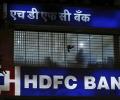
As many as 140 million customers of HDFC Bank and Axis Bank are expected to face interruption in banking services in the weekend due to the former's system upgrade and the transition of Citi India business to the latter. Both the banks have notified their customers about the interruption in services. HDFC Bank - the country's largest private sector lender with 93.2 million customers - had announced that it will undertake a system upgrade on July 13, wherein it will migrate its core banking system (CBS) to a new engineered platform to enhance customer experience.

Bain Capital-backed Tyger Capital is planning to list its shares on the Indian stock exchanges by the next financial year and is targeting to grow its assets under management by four times to Rs 20,000 crore in five years from Rs 5,000 crore now, Gaurav Gupta, MD and CEO of the firm said. In an exclusive interview, Gupta said that keeping with the growing business, the finance company expects to on-board 600 people in the current financial year as it is opening 60-65 new branches for broad-basing its network in the country.

Despite steady loan growth, the banking sector is expected to report subdued margins in the quarter ending June 2024 (Q1FY25), driven by high demand for deposits amidst tight liquidity conditions. However, according to Bloomberg analysts, listed banks are forecasted to see a 14.5 per cent year-on-year (Y-o-Y) increase in net profit. Estimates showed that banks' net interest income (NII), and revenues from interest minus interest expenses might grow 11.9 per cent Y-o-Y.

Equity supply may hit Rs 6 trillion soon.

The Nifty 50 index is poised for a revamp as the revised futures and options (F&O) stock selection criteria is seen paving the way for newly listed companies to join the benchmark index, which is tracked by passive funds with combined assets under management of more than ~3.5 trillion ($44 billion). For the first time in six years, the market regulator Securities and Exchange Board of India (Sebi) has tweaked the stock selection process for the derivatives segment that clocks a turnover of ~400 trillion daily.

Prominent exits by promoters included a Rs 15,300 crore share sale in Indus Tower by Vodafone Plc, a Rs 9,300 crore share sale by the Tata group in Tata Consultancy Services.

'You will see him frequently asking customers -- especially retail -- about service experience, pain points, areas of improvement and suggestions.'

'India represents one of the top opportunities with robust growth, solid fundamentals, and openness to foreign investment.'

The dealers operating in the space have jumped nearly three times over the past two years.

'China is struggling to get out of its property bubble.' 'Japan took 35 years to walk out of its equity bubble.' 'Bubbles can be difficult to forecast.'
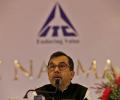
Three leading domestic voting advisory firms are not on the same page over the proposed demerger and separate listing of ITC's hotel business, ITC Hotels. Institutional Investor Advisory Services (IiAS) has recommended a vote "against" the resolution, while InGovern and Stakeholders Empowerment Services (SES) have advised their clients to vote in favour. Voting on the resolution is currently underway.

'We emphasise the importance of not basing investment decisions solely on electoral outcomes.' 'Instead, focusing on investing in high-quality businesses capable of prospering regardless of the political landscape is paramount.'

Mukesh Ambani's Jio Financial Services (JFS) is set to seek shareholders' approval for its leasing subsidiary to acquire telecom equipment and devices worth Rs 36,000 crore ($4.33 billion) from Reliance Retail. Jio Leasing Services Limited (JLSL), a wholly-owned subsidiary of JFS, plans to enter the device leasing business, and the equipment will be deployed in broadband wireless connectivity and other services.

'We may see little softness in liquidity position after the stabilisation of the government.'

The top 100 companies have accounted for 63% of the gains (Rs 51 trillion out of Rs 81 trillion), while firms beyond the top 100 have contributed 37 per cent (Rs 30 trillion).
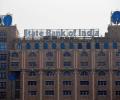
State Bank of India (SBI) is planning to recruit over 15,000 people in 2024-25, increasing the strength of those in the field for marketing. The recruits will be also for deployment in the bank's operations subsidiary and expanding the branch network. The operations subsidiary - State Bank Operations Support Services - became functional last year.

BSE (formerly Bombay Stock Exchange) has seen its market share go past the critical 20 per cent mark in the derivatives segment, intensifying its battle with bigger rival - the National Stock Exchange (NSE) - which, less than a year ago, had a monopoly in this space. In April, the average daily trading volume (ADTV) for BSE stood at Rs 89 trillion, accounting for 20.6 per cent of the overall ADTV of Rs 432 trillion (based on notional volumes for options).

The financial numbers for 2023-24 (FY24) of the four pure-play listed asset management companies (AMCs) have enthused the Street. All firms listed robust growth in net profit and revenue both during the January-March quarter (Q4) of FY24, as well as in full FY24. The strong performance comes amid a positive growth environment for the sector, led by tailwinds such as sharp growth in assets under management (AUM) and robust performance in equity offerings.

'I am shocked that the BJP makes so many commitments. What did they deliver as the NDA?'
 © 2026 Rediff.com - Investor Information - Advertise with us - Disclaimer - Privacy Policy - Sitemap - Feedback - About us - Terms of use - Grievances